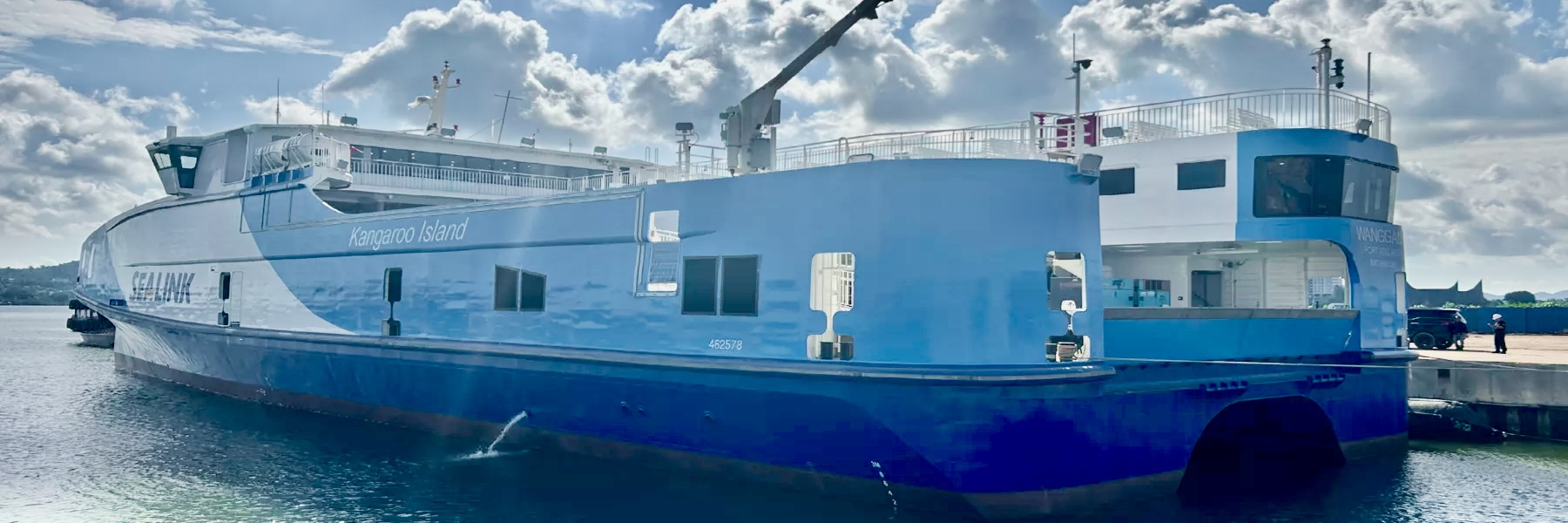
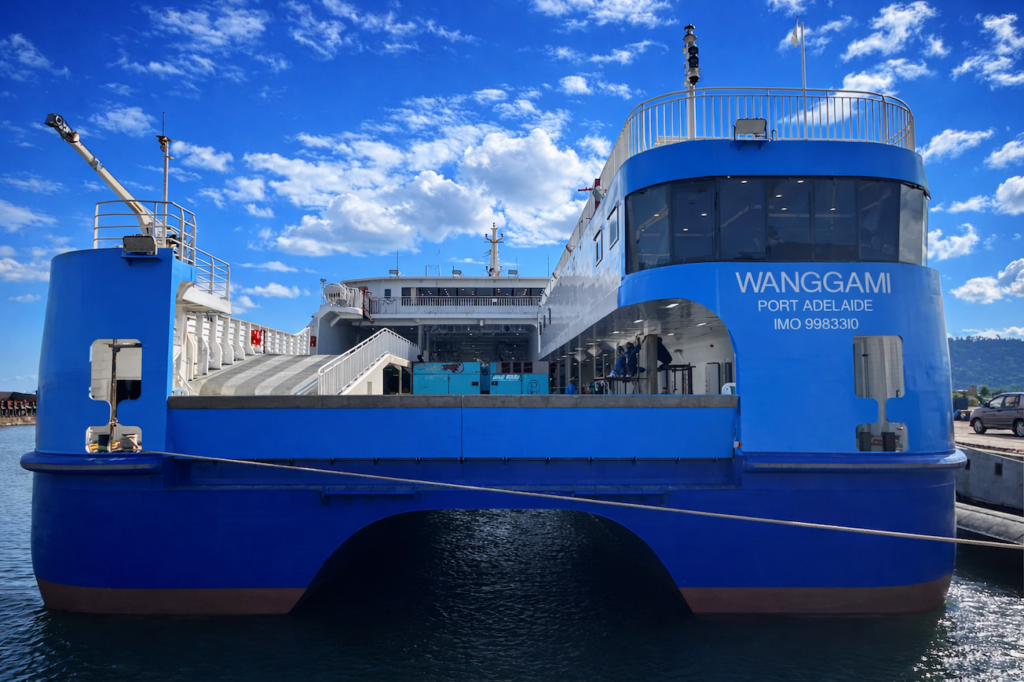
Wanggami departed the Batam shipyard in Indonesia on 13 March 2026, beginning a 5,200-nautical-mile journey south-east through Indonesian waters and down the Queensland coast. By 24 March she had reached Cairns, before continuing on towards South Australian waters. She is now in port, undergoing a structured programme of final preparations: formal handover, commissioning activities and comprehensive crew training, all aimed at ensuring the vessel is fully operationally ready before her first commercial sailing.
Construction of Ruwi is progressing well at Batam and will soon enter its own final commissioning phase, with harbour and sea trials to follow before the long passage across the Indian Ocean. SeaLink expects the second vessel to be delivered by August 2026. Once both ferries are in South Australia, the critical infrastructure works to install the new vehicle ramps at Cape Jervis and Penneshaw will be completed, followed by a five-week phased introduction. For approximately three weeks, Wanggami will enter service alongside Sealion 2000 while crew complete training and on-water familiarisation aboard Ruwi. Both new vessels will then operate together, with a formal commencement date for the new Kangaroo Island Ferry Service to be confirmed once Ruwi has departed for Australia.
The new service is the product of a $57 million investment by SeaLink, awarded in December 2021 by the South Australian Government following a competitive tender. The contract runs for 25 years until at least June 2039, with two five-year performance-based extension options. Tracy Croft, General Manager of SeaLink South Australia, framed Wanggami's arrival in Australia as "an important milestone for the new Kangaroo Island Ferry Service and for everyone who has contributed to bringing this project to life," underlining the operator's awareness of how essential the link is for Kangaroo Island residents, freight operators, local businesses and the visitors who depend on it to reach the island.
The names chosen for both vessels place the new service firmly within the First Nations heritage of this corner of South Australia. Wanggami means "kangaroo" in the Ngarrindjeri language, and Ruwi means "land". They were selected following a community naming competition, with SeaLink working closely with the Ngarrindjeri Aboriginal Corporation, which acts as agent for the native title rights and interests of the Ngarrindjeri people. Their traditional country stretches from the Lower Murray River and the Coorong to the Fleurieu Peninsula, including the waterways across which the new ferries will pass.
The native title rights and interests of the Ngarrindjeri people were formally recognised by the Federal Court on 14 December 2017, covering 578 parcels of land and water within the Murraylands, Coorong and Fleurieu. The corporation has long held that the Ngarrindjeri should have a voice in decisions concerning their Yarluwar-Ruwe, their sea country, and that their values and heritage interests should be incorporated and respected by the broader community. The formal endorsement of the vessel names by the NAC honours a connection to land and sea that has been maintained for thousands of years, and gives the new service a meaningful cultural anchor.
When the new fleet enters service, the upgrade will be substantial. At 60 metres in length and 20 metres wide, Wanggami and Ruwi are approximately 10 metres longer and 2 metres wider than the current vessels, with eight vehicle lanes instead of six. Two central lanes are specifically designed to accommodate freight carriers and high vehicles when required, and the new ferries offer around 150 metres more vehicle lane space per departure.
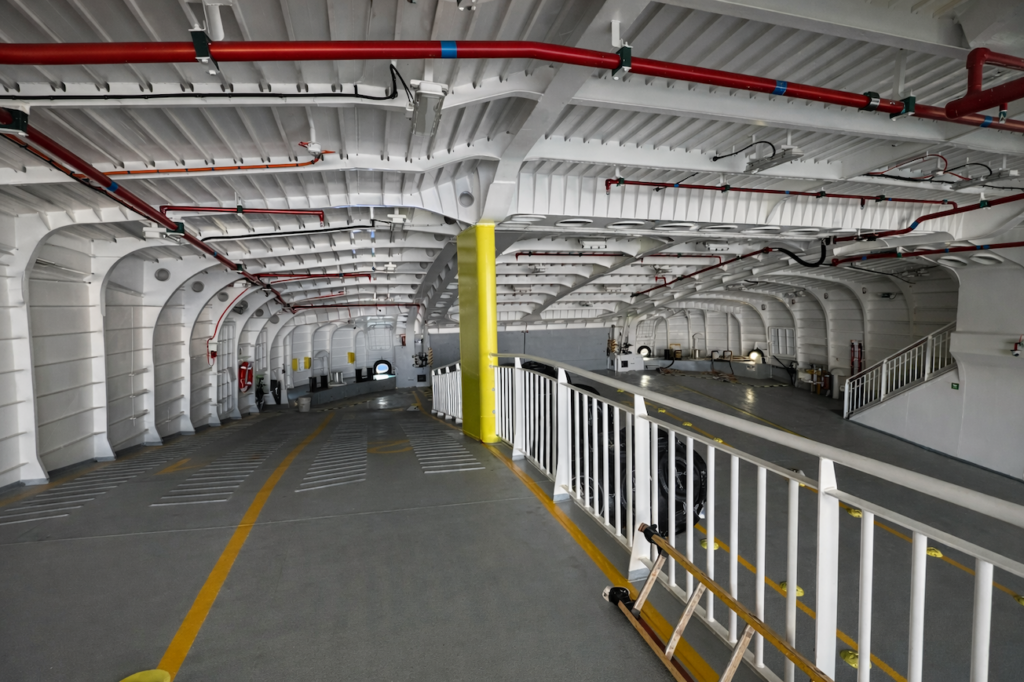
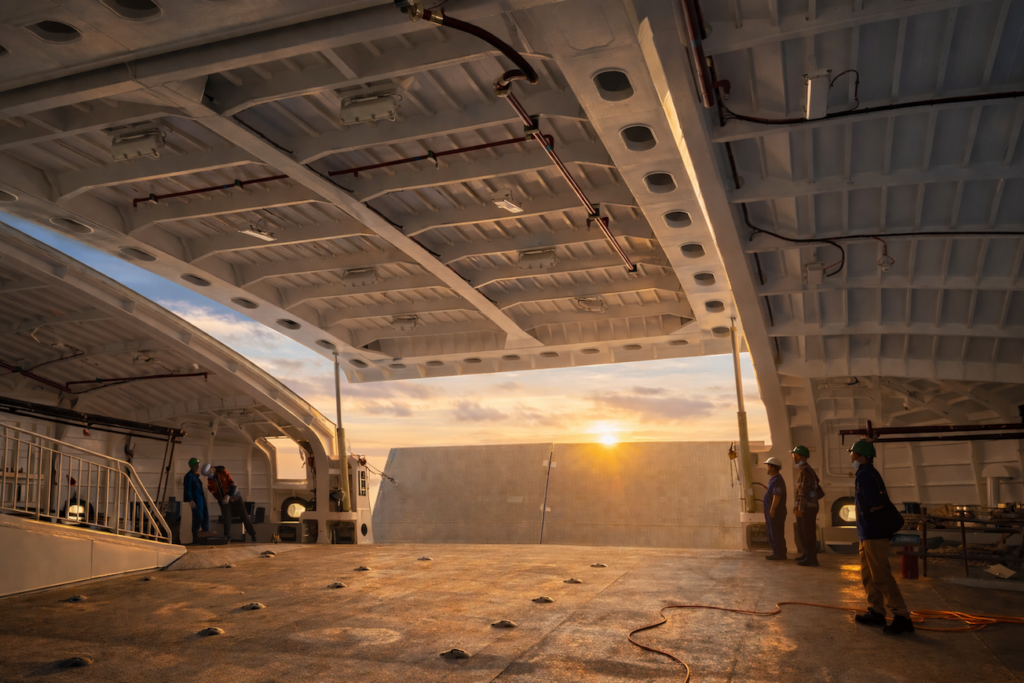
The drive-through layout allows vehicles to drive on and off in the same direction, replacing the current reversing system and making the loading and offloading process safer and faster for all passengers. Because the two vessels are identical in design, freight carriers will be able to book passage on either without concern for varying specifications.
The vessels are powered by 735 kW Tier 3 M.A.N. engines with low-emission technology, in support of a service designed to operate sustainably across the protected waters of Backstairs Passage. Their design allows direct access to engines and propellers without the need to take the vessels out of the water, which is intended to reduce service disruptions for unscheduled maintenance and improve overall reliability. SeaLink has also undertaken significant harbour infrastructure works to accommodate the new larger hulls, including dredging at Cape Jervis, the construction of a new layby berth for on-site mechanical repairs, and piling works to accommodate the new vehicle ramps at both Cape Jervis and Penneshaw.
During the interim period, SeaLink will continue to operate Sealion 2000 and Spirit of Kangaroo Island on the current timetable, with up to twelve return departures per day in peak periods. The operator has indicated that additional sailings will be introduced where demand and operational capacity allow. Travel agents handling Kangaroo Island bookings for this period are being contacted directly by SeaLink to confirm sailing arrangements, with any necessary rebookings made on the next available service at no additional charge and subject to availability. Once the new fleet is in full operation, the timetable will scale up significantly: 22 departures per day Monday to Friday during peak season (September to April), 18 departures per day at weekends, and 14 daily departures throughout the May to August off-peak.
Service commencement: The new Kangaroo Island Ferry Service is scheduled to commence later in 2026, with a confirmed date to be announced once Ruwi has departed Indonesia for Australia. Until then, the existing fleet operates on the current timetable.
Route: Cape Jervis (Fleurieu Peninsula) to Penneshaw (Kangaroo Island), a 45-minute crossing. Cape Jervis is 110 km from Adelaide GPO, around two hours by car, plus 30 minutes for check-in and boarding.
Current frequency: Up to twelve return departures per day in peak periods on the existing fleet, with additional sailings possible depending on demand and operational capacity.
Future timetable: Once both new vessels are in service, 22 departures per day Monday to Friday and 18 at weekends during peak season (September to April), and 14 daily departures during off-peak (May to August).
Vehicle capacity: The new ferries offer approximately 150 metres more vehicle lane space per departure, with drive-through loading for faster turnarounds.
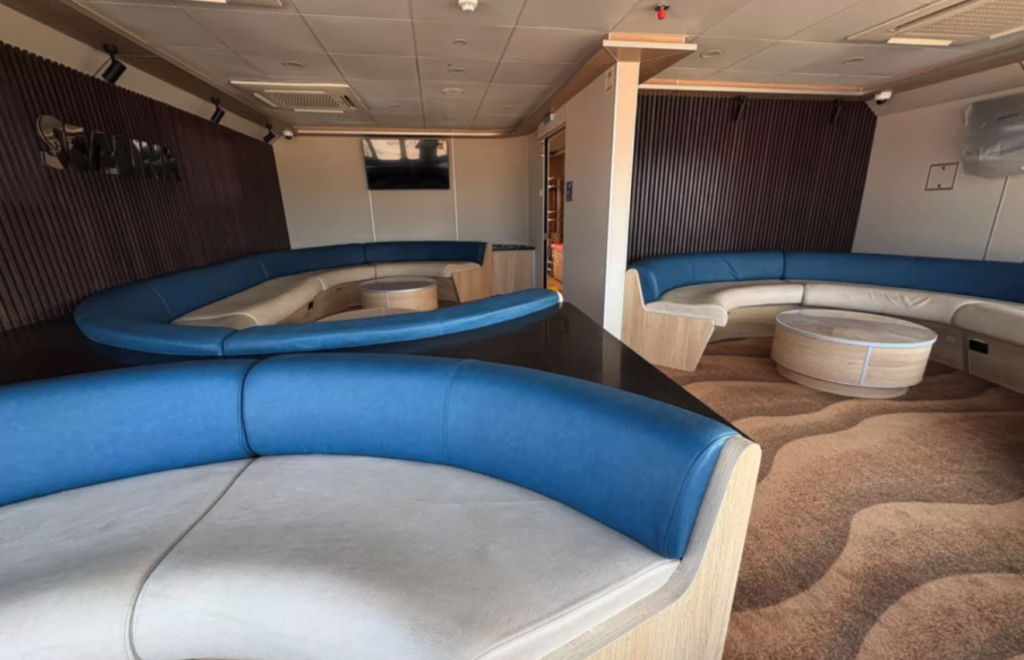
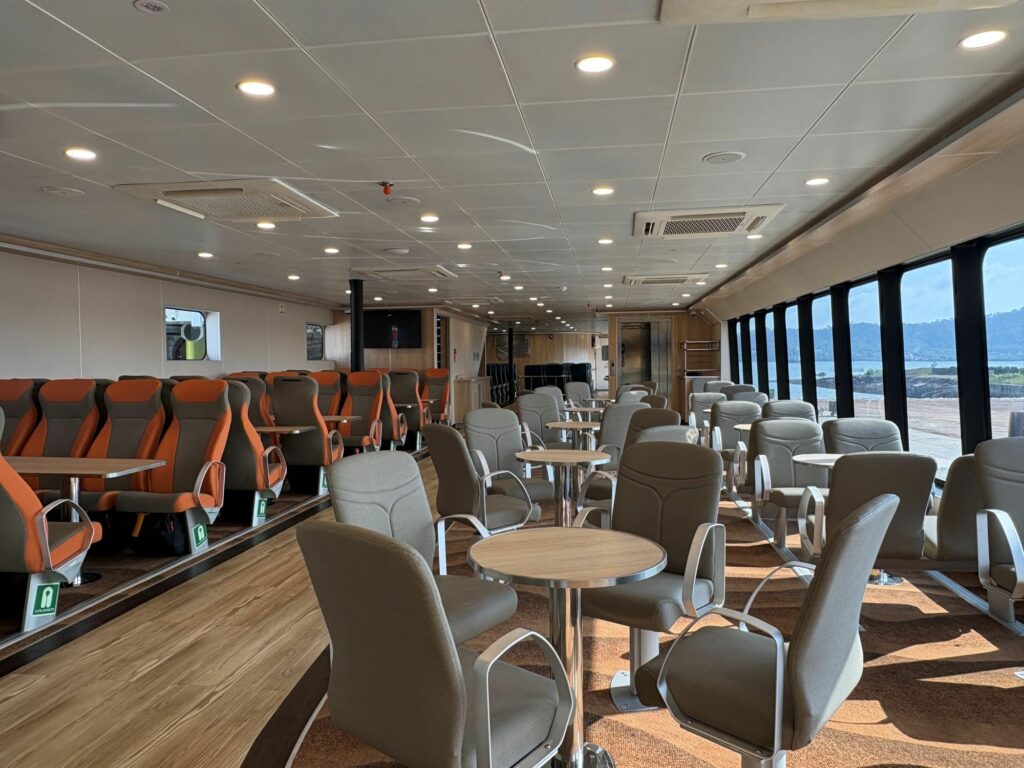
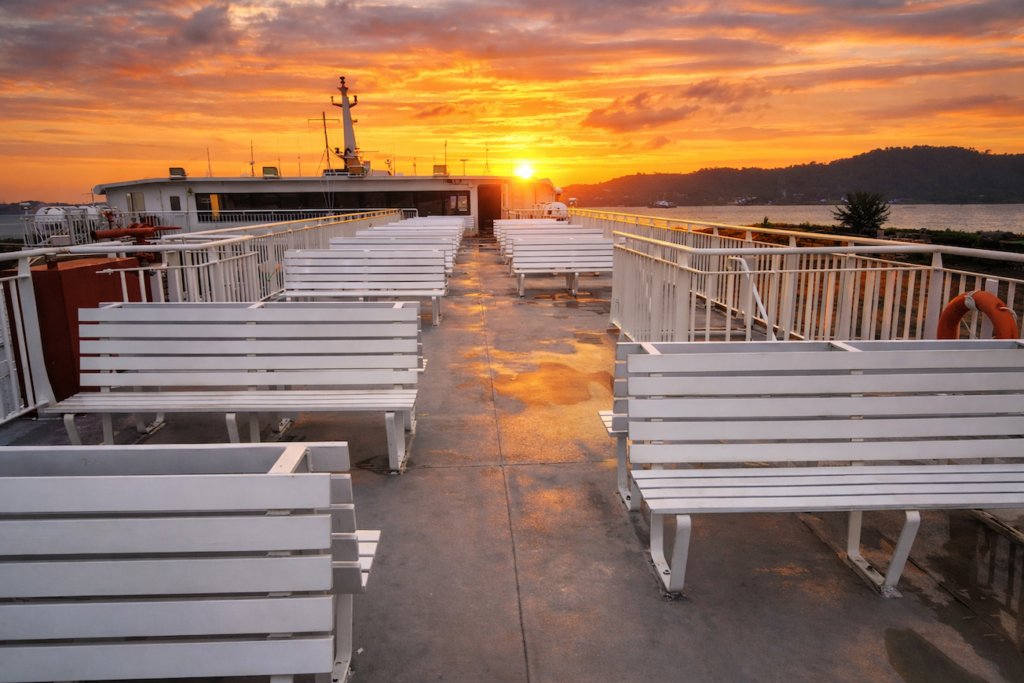
On-board amenities (new fleet): Free Wi-Fi and device charging stations throughout the vessel, a larger centrally located café, a spacious sundeck, large-format windows on every level, and a dedicated, secure, air-conditioned pet lounge accessible directly from the vehicle deck.